The story of handmade paper is the story of civilization itself - carried across continents, refined across centuries, and kept alive today in the workshops of Sanganer, Jaipur.
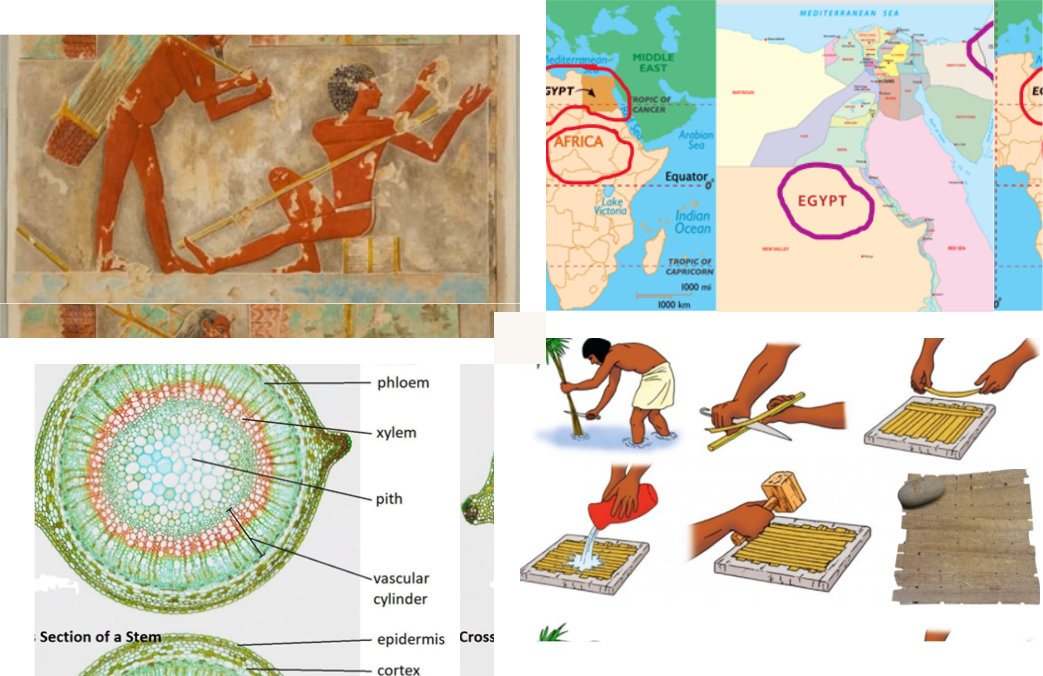
Before modern handmade paper, the ancient Egyptians created papyrus — the world’s earliest writing material made from natural plant fibres.
This invention laid the foundation for today’s paper products, inspiring centuries of craftsmanship, creativity, and the evolution of sustainable paper making across civilizations.
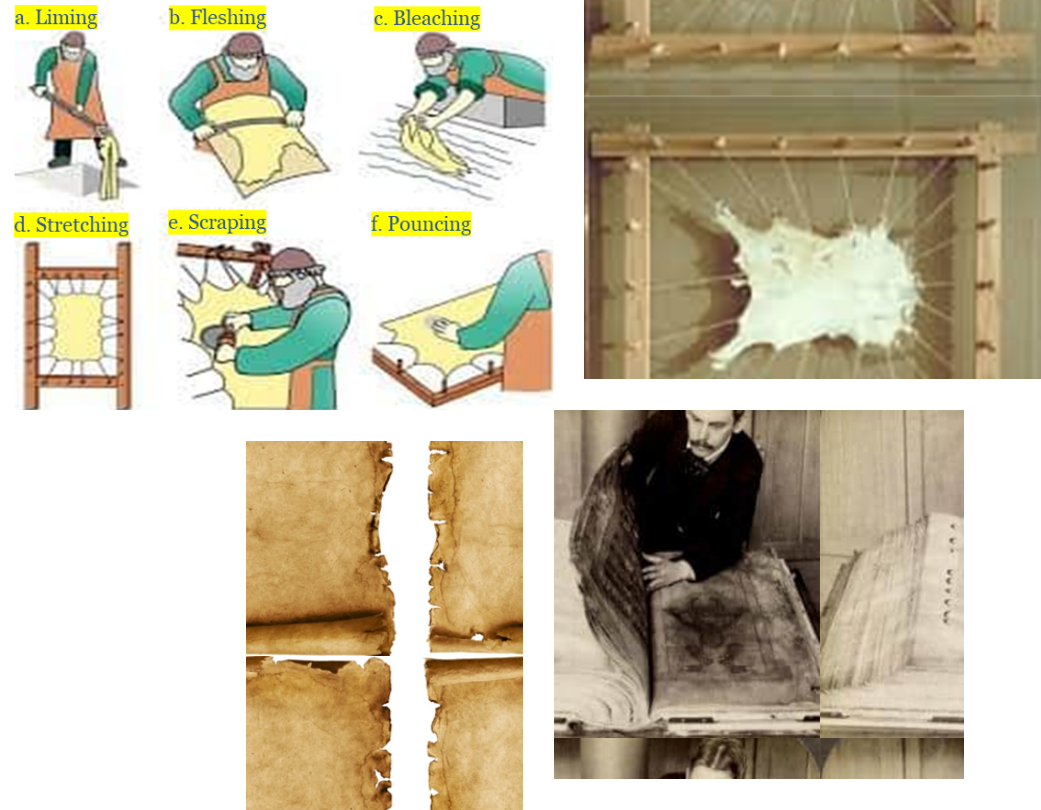
When papyrus became scarce, Europe and Asia turned to animal skin for writing and record keeping.
Parchment — made from goat, sheep, or calf hide through a labour-intensive process — became an important material for manuscripts, royal records, vintage diary making, leather journal covers, and handmade paper collections.
The famous Codex Gigas, one of the largest medieval manuscripts, was created using the skin of 160 donkeys, reflecting the rich history behind paper products, journal notebook traditions, and hand craft bookmaking.
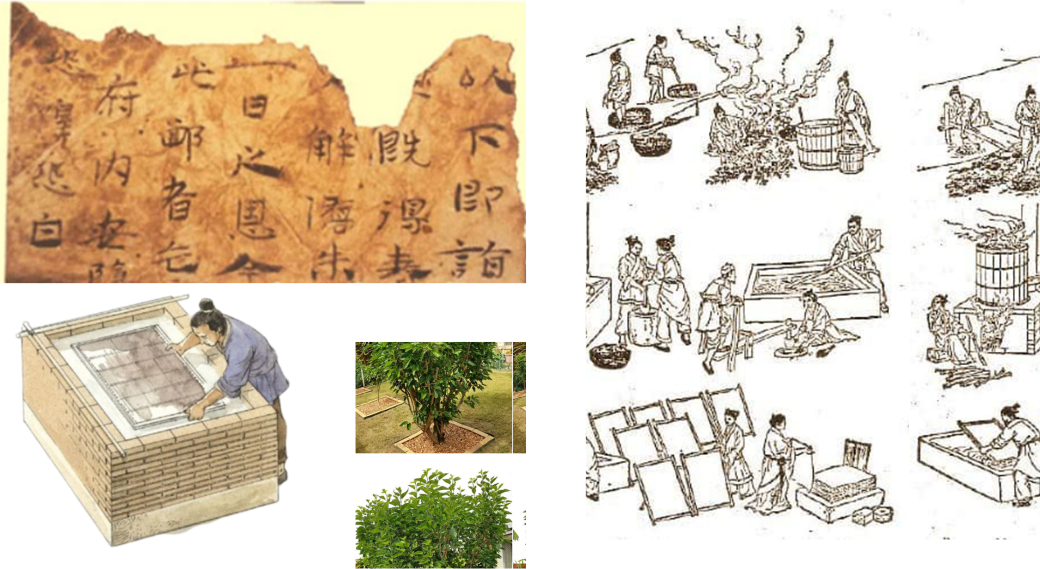
The oldest surviving writing paper was discovered in Fangmatan, Gansu Province, China, dating back to the Western Han Dynasty.
Later, Cai Lun improved the art of papermaking using bark, hemp, rags, and fishnets, laying the foundation for modern handmade paper and recycled paper techniques.
By 740 AD, China had printed the world’s first newspaper on mulberry paper, influencing the future of paper products, decorative paper, craft paper, and paper for art and craft across the world.
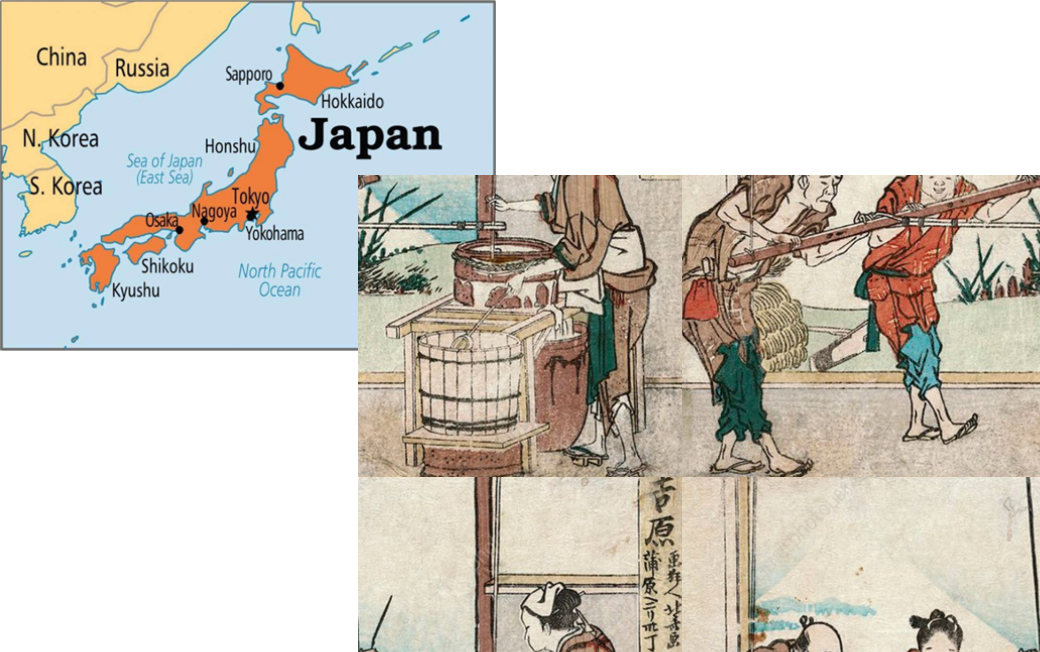
Approximately 500 years after China, the craft crossed to Korea and then to Japan through a Korean monk named Don-cho. What Japan did with it transformed papermaking into an art form.
Washi — made from the inner bark fibres of three native plants — became not just a material but a cultural philosophy. Light, strong, luminous, and deeply revered, it inspired generations of artisans and modern paper company traditions around the world.
Today, the legacy of handmade paper continues through sustainable practices like recycled paper, eco-friendly paper to make crafts, luxury stationery, and handmade in India paper products that blend heritage with creativity.
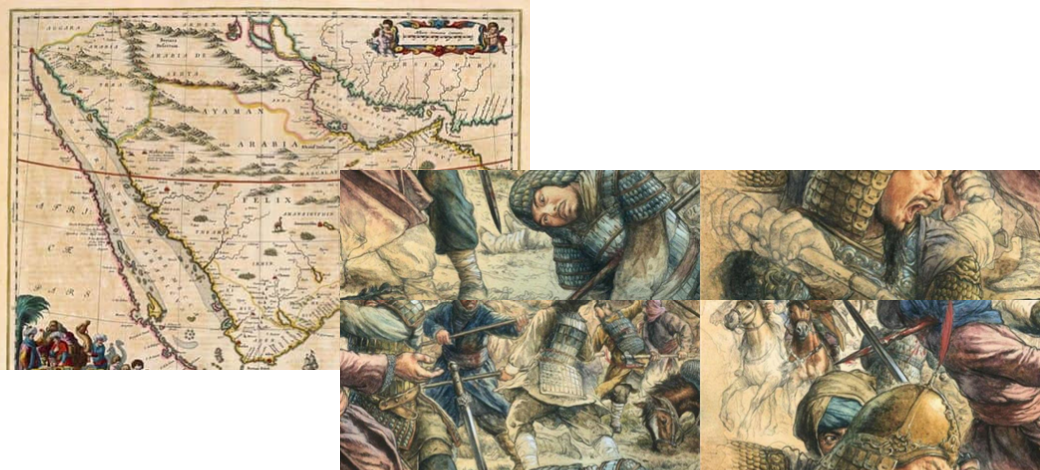
After the Battle of Talas, Arab forces defeated the Chinese army and obtained the closely guarded secret of papermaking. The craft spread across the Arab world, and the paper produced there became known as Kagaz - derived from the Urdu word Kavas, meaning paper.
The craftsmen who made it were called Kagzis. The name we carry today.
Handmade paper first arrived in India through Kashmir, introduced from Samarkand by King Zain-ul-Abidin. This early tradition of hand made paper and craft handmade techniques later inspired many handmade products and decorative paper styles still valued today.
When Emperor Babur established Mughal rule in 1526, he brought master papermakers from Bukhara and Balkh. Their skills helped expand the paper company culture, paper mill paper mill production, and luxury paper & card craftsmanship across the region.
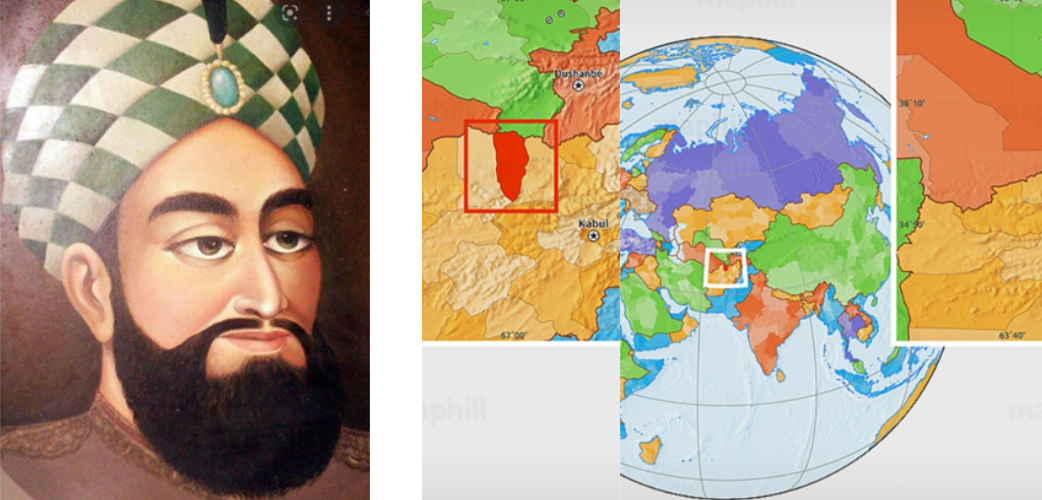
Handmade paper first arrived in India through Kashmir, introduced from Samarkand by King Zain-ul-Abidin.
When Emperor Babur established Mughal rule in 1526, he brought master papermakers from Bukhara and Balkh.
The craft flourished - becoming a major centre of production and a precious export commodity across Rajasthan, Uttar Pradesh, Madhya Pradesh, Bihar, West Bengal, Maharashtra, and Karnatka.
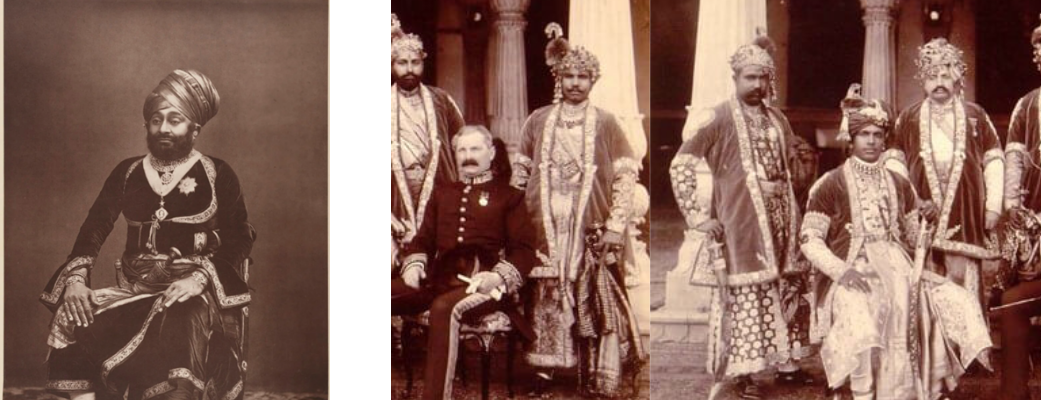
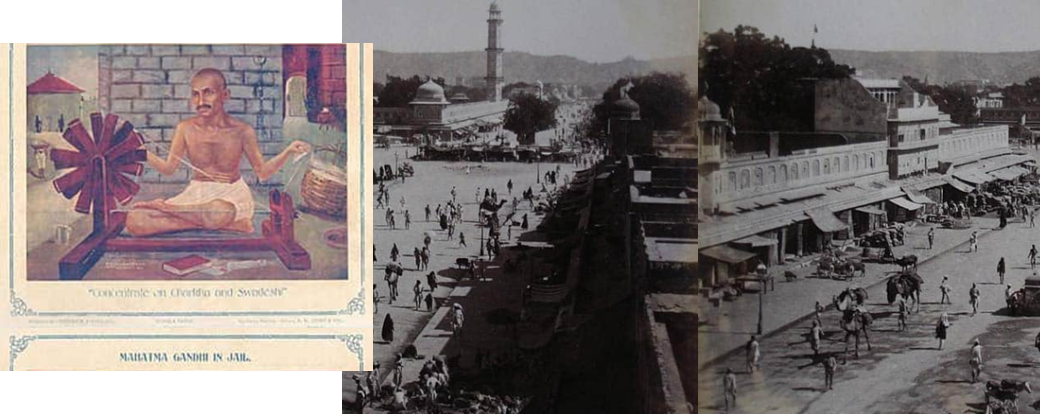
By the late 19th century, the community faced severe financial hardship, exploited by moneylenders. But history pivoted when Mahatma Gandhi recognised the importance of handmade paper as part of his Swadeshi Movement - buying paper in bulk from Kagzi artisans for his Ashram and associates.
In 1936, an order issued by Mr. B. Chemt John, Resident Commissioner of Rajputana, mandated the use of Sanganeri Kagaz in all governmental legal documents - setting fixed rates and bypassing exploitative middlemen. The official gazette of Jaipur published this on September 15, 1936. The craft was protected. The community survived.
After independence, the Khadi and Village Industries Commission (KVIC) formally included handmade paper in its list of crafts to be promoted.
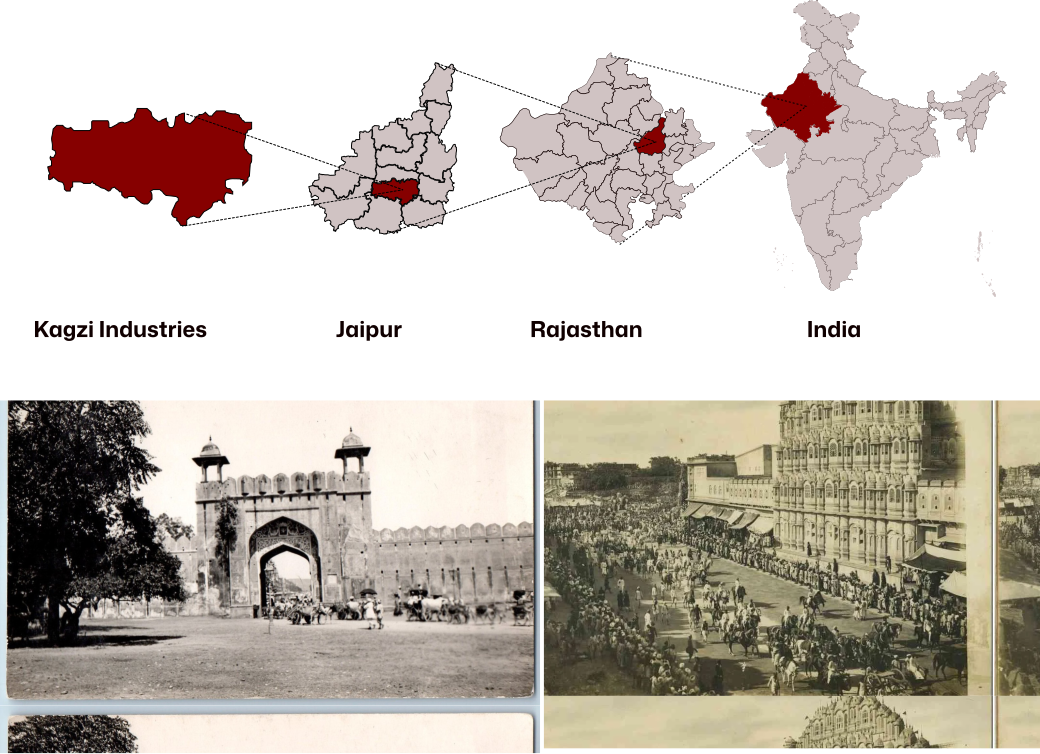
Founded in Sanganer, Jaipur, Kagzi Industries was established to carry this living tradition into a global marketplace — with innovation, sustainability, and absolute respect for the craft. As a handmade in India paper company, we create handmade products using recycled paper.
We are not the beginning of this story. We are its latest, proudest chapter.
Every sheet carries 3,500 years of human ingenuity. Feel it.






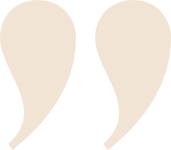
THE KAGZI FAMILY, JAIPUR
Yes. We can provide sustainable customized handmade paper in different sizes, GSM, colors, textures, and finishes that comply with your brand and product requirements.
Yes. We offer custom printing, foil stamping, embossing, debossing, and branding for premium packaging, stationery, invitations, and corporate gifting.
Yes. As a supplier of handmade paper for luxury packaging, we design exclusive papers with textures and finishes for luxury brands wanting unique packaging solutions.
Yes. We offer accurate color matching utilizing eco-friendly pigments to ensure that your handmade papers match your branding and packaging needs.
Yes. As a leading eco-friendly paper manufacturer, we offer private label manufacturing with personalized packaging, branding, and product specs to businesses throughout the world.





New collections, process stories, sustainable living guides, and early access to limited editions once a month, never more.
No spam. Unsubscribe anytime. We hate clutter too.
